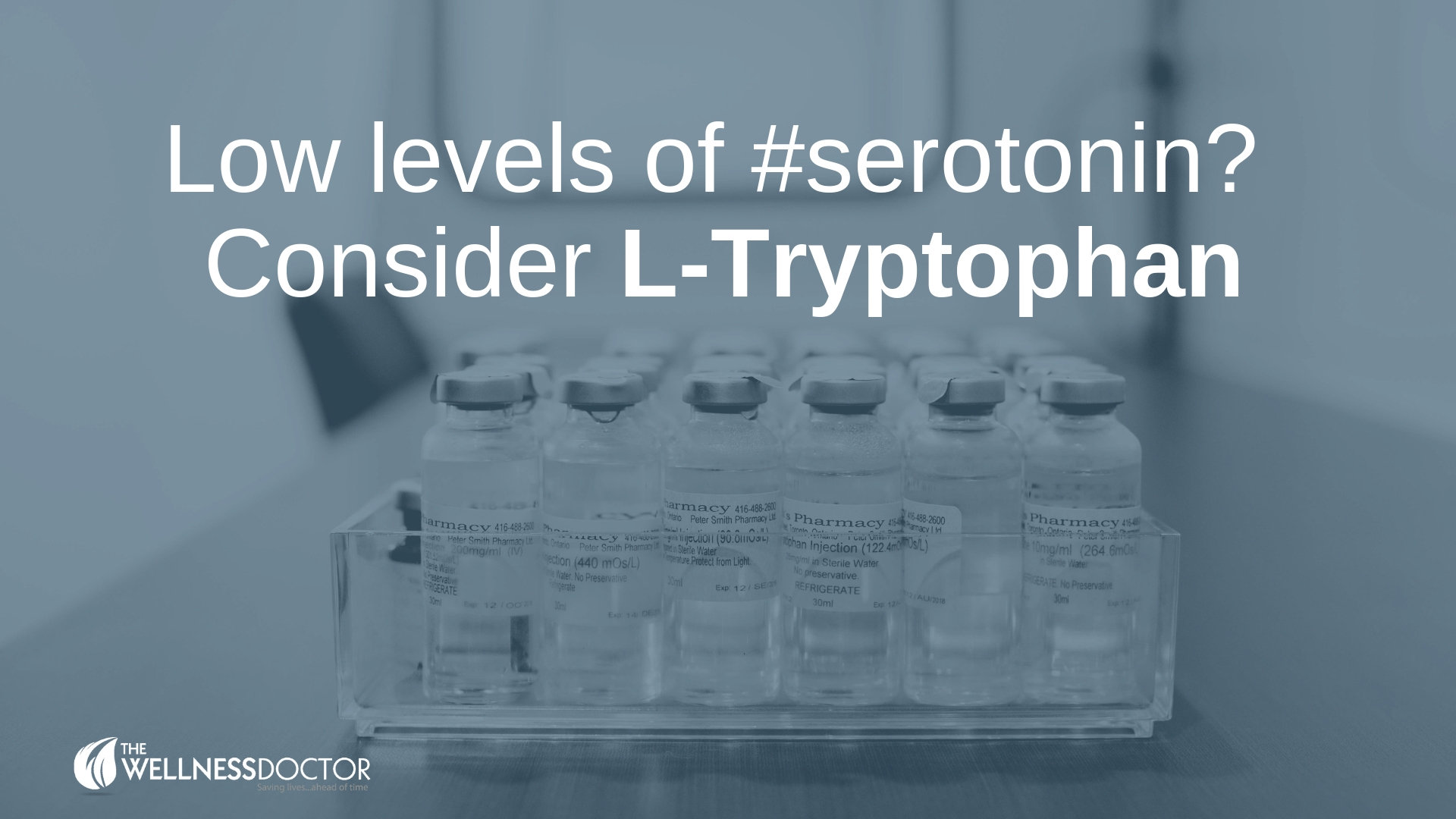
Helping patients improve their mental health is a big part of our practice. As it's mental health awareness month, I'd like to highlight one of the lesser-known prescriptions we write in the office — the amino acid L-tryptophan.
When you hear L-tryptophan, most people think of the protein precursor associated with eating too much Thanksgiving turkey. So while it's true that high amounts of tryptophan can help put you to sleep — which is why we use it for insomnia — it's also really, really useful for depression.
If your bowels are sluggish more often than not, and you have a history of recurring mild-to-moderate depression, it's likely you have a serotonin deficiency.
The tryptophan–serotonin connection
Tryptophan is a precursor to serotonin, which plays a major role in regulating mood. In fact, most prescribed anti-depressants impact the tryptophan-serotonin pathway. If you've ever been prescribed an anti-depressant, it most likely affected this very important serotonin pathway.
The rate at which tryptophan is synthesized in the brain depends on gut function — serotonin helps regulate and move stools along. So here's a clinical pearl: if your bowels are generally sluggish more often than not, and you have a history of recurring mild-to-moderate depression, it's likely you have a serotonin deficiency. Studies where tryptophan was actively depleted in patients almost always result in very acute depressive episodes.
Dosing, in clinic
While there is no ideal L-tryptophan dose, most researchers suggest a dose of 6 grams per day or less. I have found good clinical results with about half — or even a third — of this dose. I will typically prescribe 1,000 mg at bedtime and then modify the dosing throughout the day accordingly. I also like to use L-tryptophan in IVs when appropriate, although the dosing is different.
An important caveat.
While tryptophan is a safe and non-controlled natural substance, in Canada it is available at these doses only by prescription and through compounding pharmacies. Tryptophan should generally not be taken if you're presently on a drug that alters serotonin — such as SSRIs, amitriptyline, triptans, or monoamine oxidase inhibitors — because of the potential for serotonin excess. Exercise caution and speak with your prescribing doctor before taking any natural substance while on medication.
In summary
If you've had sluggish bowels, trouble sleeping, and a history of low mood or depression — you likely suffer with low serotonin. L-tryptophan might help.

