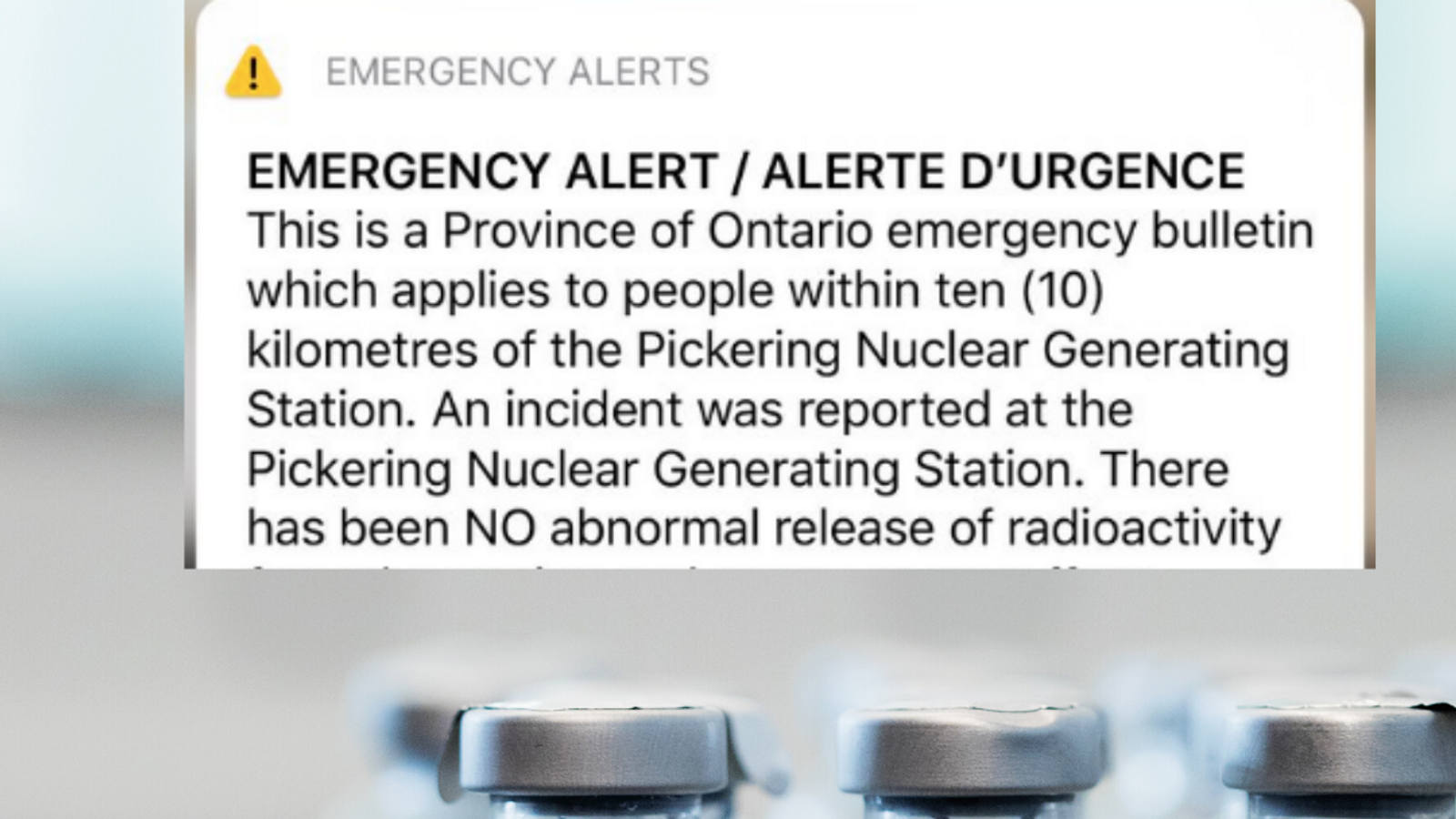
Like most Ontarians, I was awakened this morning by the bomb-shelter-like ringing of the Emergency Alert system.
I grabbed my wife's phone and read: "people within ten kilometres… Pickering Nuclear Generating Station… radioactivity."
My mind lost it. Do we have enough water? Are we in the radiation-free zone? Where should we go? What should I do?
As the fog quickly lifted, I more clearly read, "NO abnormal release of radioactivity." I exhaled. Then I started googling.
The alert was retracted, but beyond the initial panic, my first prevailing thought was: What would I do, as a naturopathic doctor, if exposed to radiation?
When our cells are exposed, the radiation is absorbed primarily by the water in our cells, resulting in the creation of reactive oxygen species (ROS). These in turn damage the cell, including the protein structures and our cell's DNA. Depending on the exposure, radiation sickness or disease can result.
While all antioxidants can mitigate reactive oxygen species, glutathione (GSH) is the one best suited to the deleterious effects of radiation exposure.
While all antioxidants can mitigate these reactive oxygen species, one antioxidant in particular seems best suited to impact the deleterious effects of radiation exposure — glutathione (GSH).
Thankfully, the danger at Pickering today was averted. Nonetheless, let's carry on with this theoretical exercise of radioprotective nutrients to consider.
Note: all dosing is conjecture; specific dosing would be based on transient vs. total exposure, ongoing exposure, patient age, size, and health status. This is theoretical.
My protocol would likely include:
- Glutathione. Glutathione has an impressive track record as an antioxidant, going back to a 1978 article in Nature: "One major cellular sulphydryl constituent, glutathione (GSH), is apparently the major component in the interaction between radiation products and the cell, for cells unable to synthesise glutathione cannot be protected against killing by ionising radiation." Dose: intravenously, probably 1,000–3,000 mg per dose.
- Melatonin. Melatonin protects the mitochondria and helps facilitate the glutathione pathway. The antioxidant is particularly effective at protecting mitochondria by increasing the efficiency of oxidative phosphorylation, reducing electron leakage from the electron transport chain. Dose: probably cancer-sized dosing — around 20 mg.
- Botanicals. Ginger (Zingiber officinale) and holy basil (Ocimum sanctum) are two to consider. Garlic (Allium sativum) and coriander (Coriandrum sativum) may also protect against radiation exposure.
- Antioxidant juice. Carrots, oranges, ginger, and turmeric (Curcuma longa). If I were to make a juice to boost antioxidants, this is one formula I would entertain. I would likely take vitamin E, olive oil, and resveratrol with this juice.
This list would likely form the basis for my recovery cocktail.
If I were to give this enough thought, I'm sure I would modify this protocol. The good news is — I don't have to. The lights are still on, we're all safe, and we can all sleep soundly — at least until the next emergency alert.

